
Christian language about spiritual struggle can encourage steadfastness, but it can also be misused to label people as threats. The seven practices below keep attention on faithful choices and observable behavior. They do not require tolerating harm or pretending that every disagreement is harmless.
James 4:7 connects resistance with submission to God, while Ephesians 6:10–18 distinguishes spiritual struggle from a battle against people. The practices here are original devotional applications of that distinction, not a list quoted from Scripture.
1. Start with what you actually know
Write a plain account of the situation before assigning a spiritual meaning. 'They interrupted me three times' describes a behavior. 'They are trying to destroy my calling' makes a claim about motive and a much larger story. You may have a serious concern without having enough information to support the larger claim.
Ask what is observed, what is reported by someone else, and what is your interpretation. Keeping those categories visible makes it easier to choose a proportionate response. You can pray while gathering facts; prayer does not require abandoning ordinary discernment. The cited passages provide the Christian frame for this article, not evidence about any individual person's motives.
2. Name the behavior without assigning a person an evil identity
A useful sentence stays close to the action: 'That comment mocked my faith,' 'The agreement was changed without consulting me,' or 'I am not willing to be shouted at.' These illustrative scripts make a concern clearer. Calling the person a demon, a hyena, or an enemy adds a label that may escalate the conflict without explaining what must change.
This does not mean every behavior is morally equivalent. You can name deception, cruelty, intimidation, or abuse clearly when those descriptions fit. Precision strengthens accountability. Dehumanization weakens it by replacing an actual account with a total judgment about the person's nature.
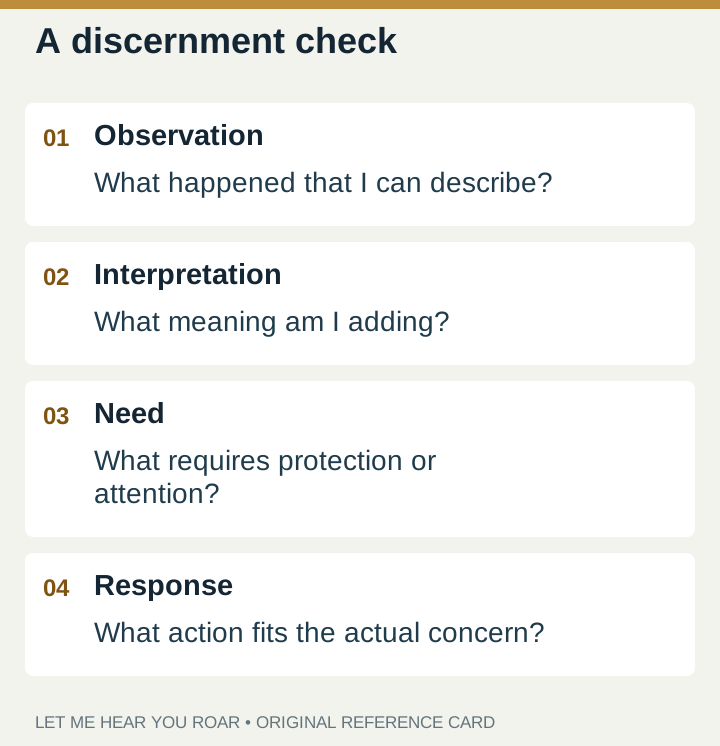
3. Pray for your response before rehearsing their defeat
An original prayer might be, 'Lord Jesus, help me respond truthfully and wisely. Keep me from cruelty. Show me what support and limits are needed.' This directs attention to choices you can make. It need not deny anger or the desire for justice, and it does not oblige you to return to a dangerous setting.
If your prayer has become an imagined argument in which you repeatedly humiliate the other person, pause and ask what you need underneath that scene. Perhaps you want to be believed, protected, or treated fairly. Naming that need may point toward a concrete source of support rather than another round of rehearsed conflict.
4. Set a limit you can realistically act on
A boundary might describe your availability, what you will discuss, or what you will do if a conversation becomes degrading. For example, 'I can discuss the decision, but I will end the call if insults continue.' Consider whether you have the practical ability and support to follow through before choosing the sentence.
No script guarantees safety or cooperation. If a person threatens, controls, or intimidates you, individualized safety support is more appropriate than a challenge to confront them bravely. Resistance to wrongdoing can include stepping away, documenting a concern where appropriate, or involving someone equipped to help. Courage does not always mean direct contact.
5. Let another perspective test your interpretation
Choose someone who can listen carefully and ask questions without merely confirming your first reaction. Explain the observable facts, your interpretation, and the response you are considering. Ask, 'What am I missing?' A useful helper may agree that the behavior is harmful while questioning one part of your explanation.
Be careful about sharing private details widely in the name of getting counsel. Provide what the helper needs to understand the issue, and avoid recruiting a crowd to judge someone. If the situation involves safeguarding or serious misconduct, use an appropriate reporting and support route rather than relying on an informal prayer discussion to investigate it.
6. Leave room for repair without making yourself responsible for it
Someone may acknowledge what happened and change their behavior. You can consider that evidence over time without promising immediate trust. A repair involves more than a moving apology; it can include a clear account, practical changes, and respect for the affected person's choices.
You are not required to manufacture reconciliation by supplying enough patience, prayer, or access. Nor do you need to dismiss a sincere improvement merely to preserve your original interpretation. Discernment can remain responsive to evidence. Ask what has changed, what remains uncertain, and what conditions would make any further contact appropriate.
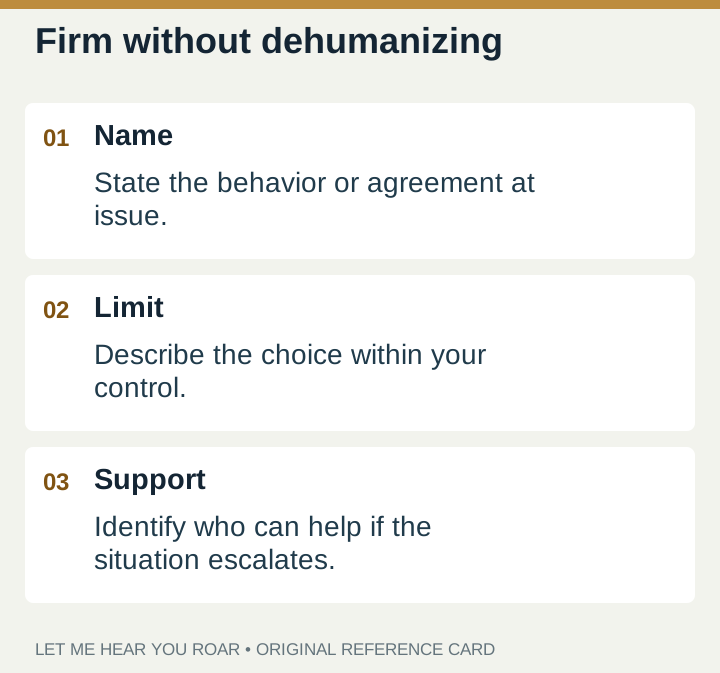
7. Measure your next action by truth and dignity
Before acting, ask whether the response addresses the actual problem, protects necessary limits, and preserves the humanity of everyone involved. A firm complaint can meet those tests. A mocking post aimed at rallying contempt may not, even if the underlying grievance is real. Choose the action for its purpose rather than its ability to deliver a moment of victory.
Afterward, review your own choices without assuming responsibility for the other person's reaction. Did you communicate the concern accurately? Did you seek suitable support? Is there anything you need to repair? This reflection can guide another step while leaving unanswered spiritual questions unanswered.
Bonus reflection: separate the person from the pattern
Draw two columns titled 'Person' and 'Pattern.' In the first, write only what preserves a basic recognition of humanity: a person whose full story you do not know. In the second, name the behavior requiring attention. This is a thinking exercise, not a diagnosis and not an instruction to minimize danger.
If the columns are difficult to separate, discuss the situation with someone trustworthy before escalating the language. You can reject a pattern decisively without claiming complete knowledge of a soul. That distinction gives your next action a clearer and more responsible purpose.
Your next step: choose one practice for one situation
Select the practice most relevant to a current concern. You might replace one label with a factual description, draft a realistic boundary, or ask a trusted person to examine your interpretation. Keep the scope small enough to act on thoughtfully.
Christian resistance can be rooted in prayer, truth, and steadfastness while refusing contempt. You do not need to make another person less human to take harmful behavior seriously. Begin with the concrete responsibility in front of you, and choose the support that responsibility requires.
Connect the ideas
A useful companion is speaking your beliefs without silencing others, particularly when a disagreement feels personal.
If words have already caused hurt, these ways to repair a conversation offer practical language for taking responsibility.
What to take with you
- Describe behavior before interpreting motives or spiritual causes.
- Dignity and accountability belong together.
- Prayer can accompany boundaries, evidence, and appropriate support.
Questions readers ask
Does this mean ignoring spiritual beliefs about evil?
No. This Christian reflection takes spiritual struggle seriously while distinguishing it from claims about a specific person’s identity or motives.
Must I keep talking to someone who harms me?
No. Limits, distance, and appropriate safety support may be needed. The article does not prescribe confrontation or reconciliation.
PUT ONE IDEA INTO PRACTICE
Your next step
Explore faith reflections that support truth and dignity.
Explore faith and speaking life ↗Sources & further reading
AI-assisted educational writing based on Joshua’s project direction. How this content is created. Original coaching reflection. Examples are illustrative unless identified as Joshua’s personal story. This article is not a clinical assessment or individualized treatment advice. Research and Scripture are linked for context; no independent clinical review is claimed.

Father, Marine Corps veteran, Christian counselor, coach, and the founder of Let Me Hear You Roar.
Read the story behind the project ↗